One offer.
Three hooks.
A paid social concept for Halfmoon Tiffins, a fictional home-style lunch service for Bengaluru offices. Three ads sell the same offer through three different motivations: money, home and time.
Brand
Halfmoon Tiffins (fictional), home-style lunch delivery
Offer
First 5 lunches at ₹99 each
Channel
Instagram & Facebook feed and Stories
Goal
First orders that turn into weekly plans
01 — The brief
Get strangers to try a lunch subscription.
Purpose Be clear about the one job the ads have to do.
The business
Home-style lunch, in steel
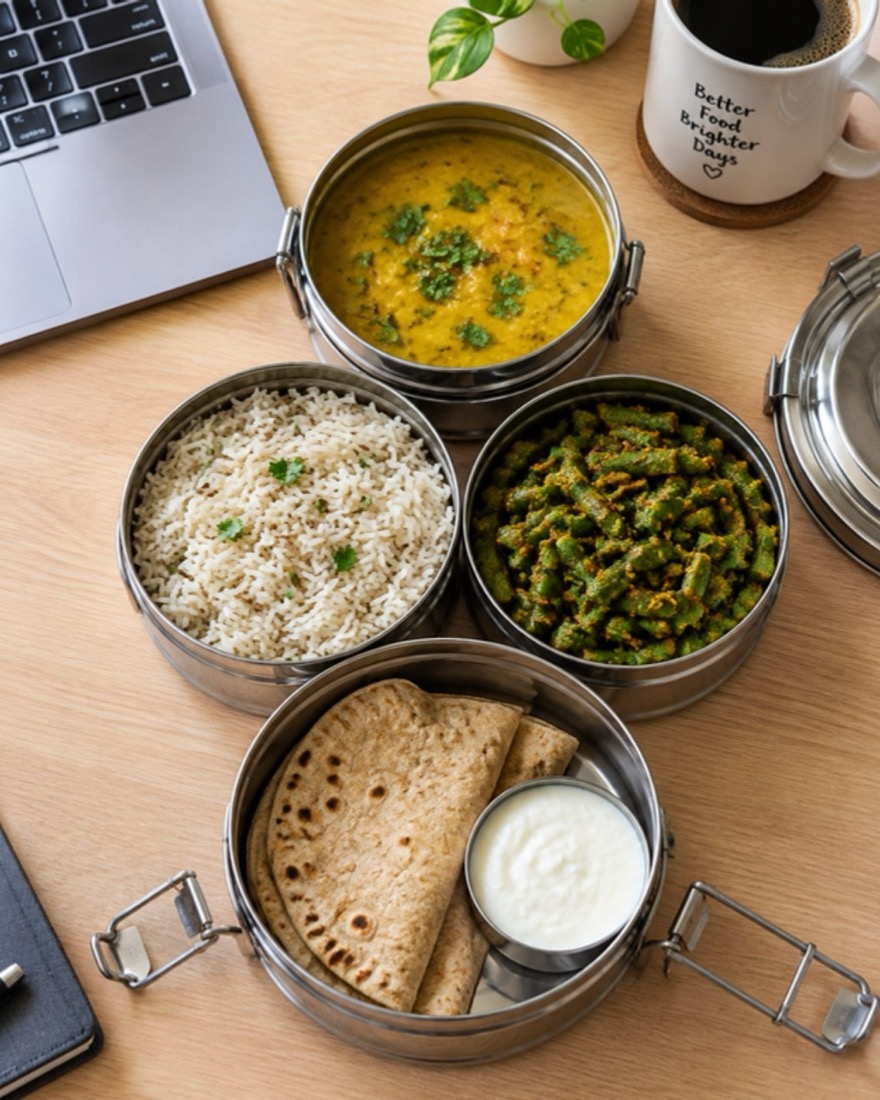
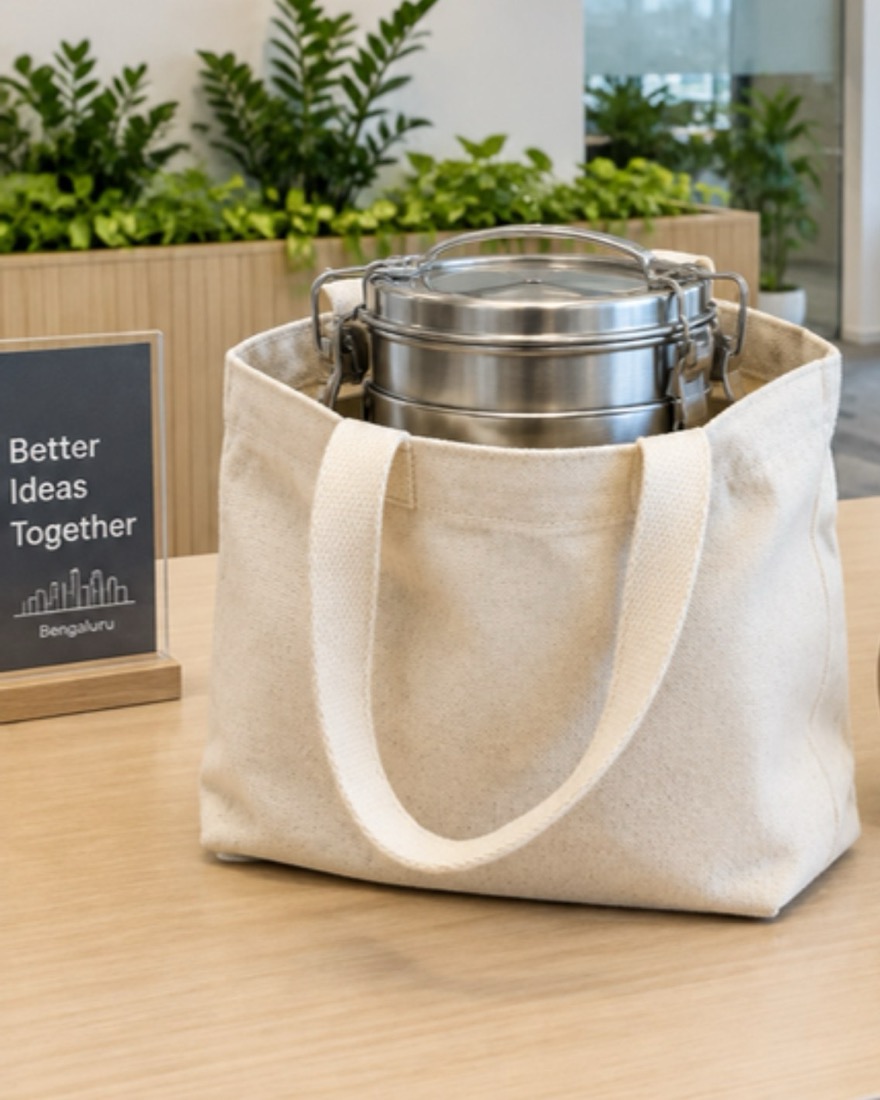
Everyday North and South Indian meals, cooked fresh, delivered to office receptions by 12:30. Steel tiffins are collected the next day.
The ask
Launch paid social
Three ad variations for one offer, so the team learns which reason to buy is strongest before scaling spend.
Success looks like
Trials that stay
Not the cheapest click. First orders that turn into weekly plans after the trial ends.
02 — Audience
Same lunch, three different reasons.
Purpose Each ad targets one group, so the hook can speak to exactly what that group cares about.
Ad A
The daily orderer
22–28, first or second job, orders lunch on a delivery app most days.
I spend so much on lunch and it’s not even good.
- Cares about
- Price per meal, value, not feeling ripped off.
- Reached by
- Interest in food delivery, deals, budgeting; office areas.
Ad B
The one who moved
24–32, moved to Bengaluru for work, lives in a PG or shared flat, misses home food.
I haven’t had proper dal-chawal since I left home.
- Cares about
- Familiar taste, less oil, feeling looked after.
- Reached by
- Recently moved, home-state interests, Hindi/regional food content.
Ad C
The lunch skipper
28–40, back-to-back meetings, often eats late, at the desk, or not at all.
By the time I think about lunch, it’s 3 pm.
- Cares about
- Not having to decide, reliable timing, no effort.
- Reached by
- Job titles (managers, leads), productivity interests, tech parks.
Segments are assumptions for this concept. A real project would check them with a short survey of early customers.
03 — Business problem
Food ads all look the same.
Purpose Understand why a new lunch brand gets scrolled past.
1
The default is an app
Ordering lunch on a delivery app is a habit. A new brand has to give a reason to break it.
2
Subscriptions feel risky
A stranger is asked to commit to a week of food they’ve never tasted.
3
Nobody remembers the ad
Most food ads show a plate from above and a discount. People scroll past without noticing which brand it was.
The typical food ad: a plate from above, a discount badge, “Order now”. If you can swap the logo and nothing changes, the ad isn’t building a brand. So these three ads each lead with a human reason, and the price comes second.
04 — Insight
Nobody wants to decide lunch again.
Purpose Find the shared truth, then the three doors into it.
The insight
Office lunch isn’t really a food decision. It’s a 1 pm problem people have to solve every single day.
Halfmoon removes that problem. But people feel it differently: some feel it in their wallet, some feel it as homesickness, some feel it as lost time. So the ads don’t argue about food. Each one opens a different door to the same relief.
Money“I’m overpaying for food I don’t even enjoy.”
Home“I miss food that someone made with care.”
Time“I don’t have the headspace to think about lunch.”
05 — Strategy
Change one thing. Learn one thing.
Purpose Keep everything fixed except the hook, so the results show which reason to buy is strongest.
Kept the same
So the test is fair
- OfferFirst 5 lunches at ₹99 each
- Landing pageOne page with the menu, delivery areas and order button
- Visual systemSteel tiffin, warm light, serif headline, turmeric price pill
- Format4:5 feed image + 9:16 Story version
- BudgetSplit evenly across the three ads
Changes
The hook
- Ad AMoney: “₹400 for a sad salad? Again?”
- Ad BHome: “Tastes like someone packed it for you.”
- Ad CTime: “Lunch: sorted before your 10 am stand-up.”
- CopyBody text that supports that one reason
- ImageThe moment that matches the hook
5 lunches · ₹99 each
Delivered to your office by 12:30. Weekly plans only start if you choose one. Steel tiffins collected the next day.
The price is a placeholder for the concept. A real offer would be set from food cost, delivery cost and the expected trial-to-plan rate.
06 — Creative
The three ads.
Purpose Show each ad as it would appear in the feed, and why it should work for its audience.
A
Hook · MoneyThe daily orderer
halfmoon.tiffinsSponsored
•••₹400 for a sad salad?
Again?
Halfmoon
Real lunch · ₹99 for your first 5
Real lunch · ₹99 for your first 5
Order nowOrder now
halfmoon.tiffins Dal, sabzi, rice, rotis and curd. Cooked this morning, delivered to your desk by 12:30. Your first 5 lunches are ₹99 each. … more
- Why it works
- Names a cost they already feel every day, then shows a better lunch for less.
- Watch out for
- It may attract deal-seekers who leave after the ₹99 lunches. Check week-2 plans, not just orders.
B
Hook · HomeThe one who moved
halfmoon.tiffinsSponsored
•••Tastes like someone
packed it for you.
First 5 lunches · ₹99 eachSee this week’s menuOrder now
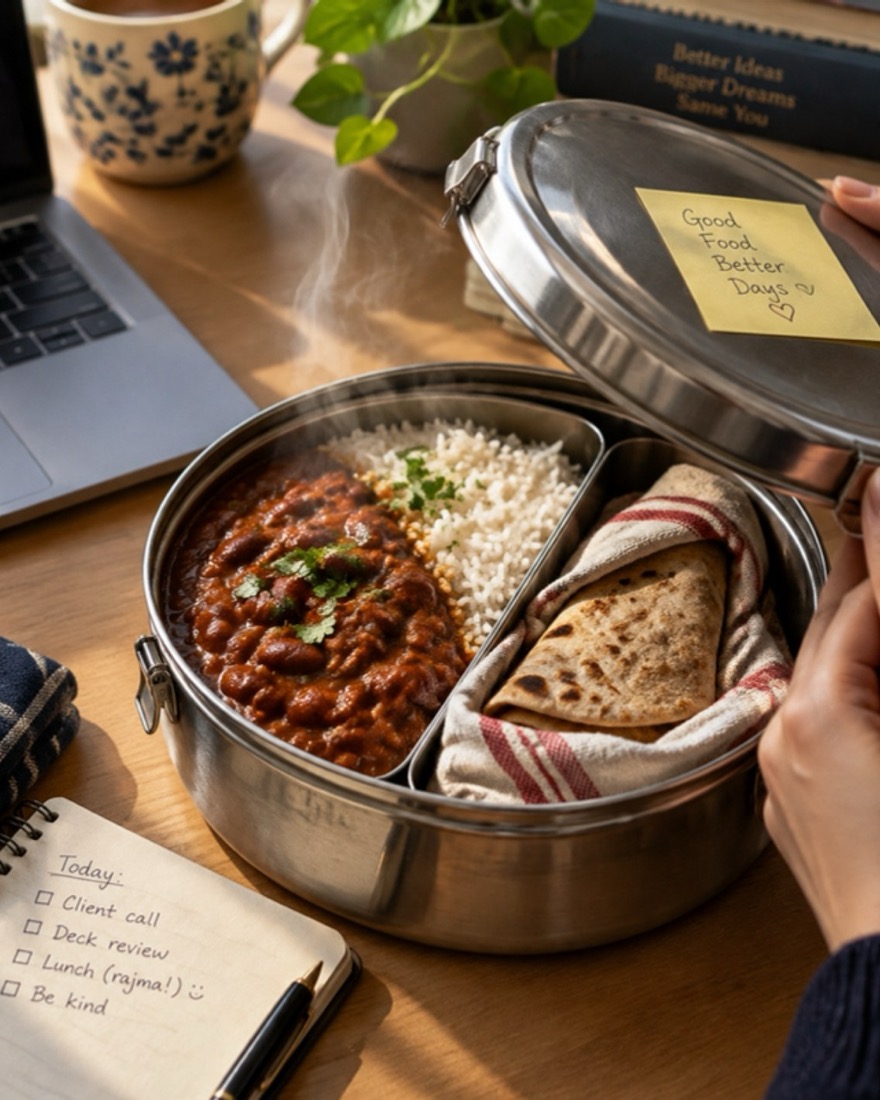
halfmoon.tiffins Moved to Bengaluru for work? We cook the everyday food you grew up on. Less oil, no shortcuts, packed in steel. Rajma chawal on Tuesdays. … more
- Why it works
- Turns a tiffin into a feeling: being looked after. That’s hard for a delivery app to copy.
- Watch out for
- Emotional ads can get likes without orders. Judge on cost per first order, not engagement.
C
Hook · TimeThe lunch skipper
halfmoon.tiffinsSponsored
•••Lunch: sorted.
Before your 10 am stand-up.
At reception by 12:30 · ₹99 for your first 5
Pick your weekOrder now
halfmoon.tiffins Choose your week’s lunches in two minutes. We bring them to your office reception by 12:30 and pick up the tiffin tomorrow. Nothing to decide at 1 pm. … more
- Why it works
- Sells the absence of a decision. It speaks to people who value reliability over price.
- Watch out for
- Only works where delivery is on time. Launch only in office areas the kitchen can reach by 12:30.
Stories & Reels placement
The hook in the first second.
In full-screen formats people decide in a moment, so each Story opens with the hook alone, then shows the tiffin, then the offer.
- Second 0–1: the hook line, big, nothing else.
- Second 1–4: the tiffin opening, with real food.
- Second 4–6: the offer and “Swipe up to order”.
Tastes like someone packed it for you.
See the menu ↑Lunch: sorted. Before your 10 am stand-up.
Pick your week ↑
07 — What I would test
Three rounds, one question each.
Purpose Learn step by step, so every rupee of spend teaches the team something.
Round 1
Which hook wins?
All three ads run to the same broad audience in office-dense areas, using a split test so each ad gets equal budget.
Changes: only the hook.
Decides on: cost per first order.
Decides on: cost per first order.
Round 2
Does matching help?
Each hook runs to the audience it was written for, against the Round 1 winner shown to that same audience.
Changes: audience + hook pairing.
Decides on: cost per first order + week-2 plans.
Decides on: cost per first order + week-2 plans.
Round 3
Make the winner better
Keep the winning hook. Test formats: a short Reel of the tiffin being opened, a carousel of the week’s menu, and a customer-style video once real customers exist.
Changes: format and visual.
Decides on: cost per weekly plan.
Decides on: cost per weekly plan.
| Ad | Hypothesis | We’re right if… | We’re wrong if… |
|---|---|---|---|
| A · Money | Price pain is the fastest way to a first order. | Lowest cost per first order in Round 1. | Orders come cheaply but few people choose a weekly plan. |
| B · Home | Emotion builds the most loyal customers. | Highest share of trials that become weekly plans. | Lots of saves and comments, but a high cost per order. |
| C · Time | Busy professionals value reliability over price. | Strong results with older, senior job titles in Round 2. | Click-through is low, because “saving time” feels vague for lunch. |
Set the stopping rule first
Agree the minimum spend and number of orders per ad before the test starts, so nobody calls a winner too early.
Change one thing at a time
If the hook and the image both change, you can’t tell which one made the difference.
Don’t pick on clicks alone
The cheapest click can bring the least loyal customer. Follow people through to week two.
Refresh before fatigue
When frequency rises and results drop, rotate in a new image with the same hook.
08 — Measurement plan
What I would measure.
Purpose Measure each ad all the way from the scroll to the second week.
3-second view rate (video) · reach & frequencyDoes the hook make people pause?
Link click-through rate · cost per clickDoes the hook make them curious enough to look?
Landing page conversion · cost per first orderDoes the offer close the deal?
Lunches actually delivered and eaten · feedbackDid the food live up to the ad?
Trial → weekly plan rate · cost per weekly planThe real measure: which hook brings customers who stay?
Before launch
Set up tracking
Pixel and conversion events for “first order” and “weekly plan”, UTM tags per ad, and a “How did you hear about us?” question at checkout.
Round 1
Set the baseline
No targets until there is real data. Record cost per first order for each hook as the starting point.
After Round 2
Scale what lasts
Move budget to the hook with the lowest cost per weekly plan, not the lowest cost per click.
This is a concept project for a fictional brand. There are no results to report, so this section sets out proposed goals and a measurement plan instead.
Riya DeskWant ads that
Work with me →
Want ads that
teach you something?
I’m Riya, founder of Riya Desk. I combine strategy, creativity and AI to help businesses become the brand people choose.